An inheritance can look wonderfully clear on paper. Draw a line through a property, divide the assets, give each child a share. The difficult part begins when those shares become evidence in a family argument about effort, gratitude, and who has made the most of a chance.
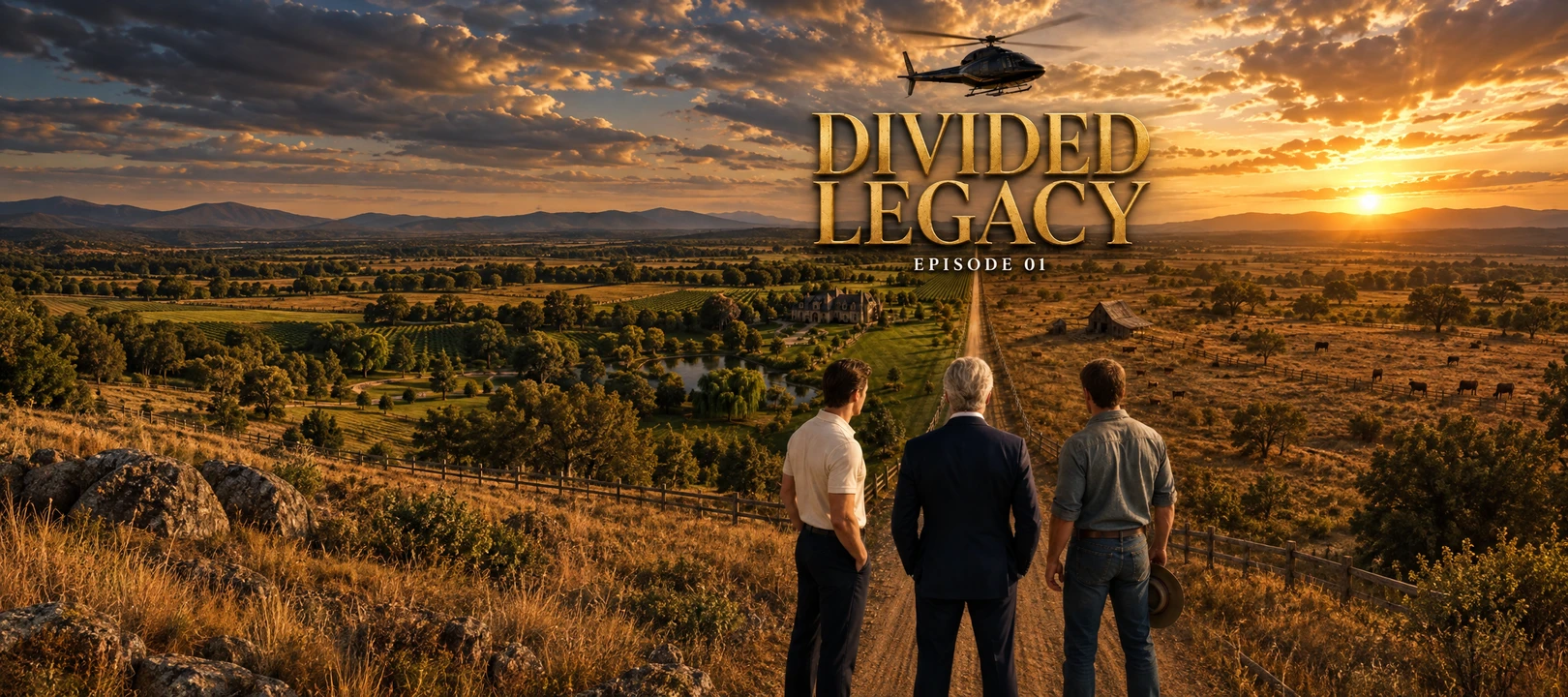
Divided Legacy starts with a father returning five years after dividing land between his sons. Their plots now have separate histories, and his arrival brings those histories into the same frame. There is no need to know what happens next to feel the discomfort of being asked to stand beside a sibling and account for your life.
A patch of land is especially good at making comparison feel unavoidable. You can point at it. You can walk its boundary. You can look across and see that someone else has chosen differently.
When a gift becomes an obligation
A gift may arrive without a written condition and still feel as though it has instructions attached. Make something of this. Do not waste the opportunity. Show that the person who gave it to you was right to do so.
Those expectations can be affectionate, demanding, or both. A parent may sincerely want their children to become independent while continuing to measure the results. The children may feel grateful for the starting point and uneasy about how long they will have to justify what they do with it.
Imagine two siblings given the same amount of money. One starts a business; the other uses it to reduce their working hours and care for a relative. A balance sheet might make the first decision easier to admire. A conversation about how they wanted to live could produce a very different comparison.
That hypothetical matters because equal starting amounts do not supply a shared definition of success. Before comparing outcomes, somebody has to decide what counts. Is it income, security, independence, or the usefulness of what has been built? A family can argue about the numbers while actually disagreeing about the question.
A sibling is a difficult audience
Comparing yourself with a stranger leaves some room for distance. You know little about their childhood or the help they received. With a sibling, every current achievement can acquire a long prehistory: who was trusted first, who was praised, who was expected to be responsible.
This gives an inheritance drama more to work with than a competition over property. A favorable judgment can feel like confirmation of an old family role. An unfavorable one can feel as though years of effort have failed to change anything.
There is room for contradictory feelings here. You can be proud of a sibling and dislike being compared with them. You can want a parent's approval while wishing it mattered less. A family story becomes more involving when it leaves those feelings tangled together instead of assigning one tidy motive to each person.
Land gives the tangle a physical setting. A fence separates ownership, but it cannot stop someone looking across. A neighbor's progress can become part of the view from your own home. The comparison remains nearby even after a difficult conversation has ended.
The opening of Divided Legacy makes that closeness its invitation. Amado, Nico, and Elias have a shared past and separate claims on what the past should mean. As their story begins, consider whose definition of a successful life you are being asked to accept.
The interesting question is larger than which son has done better. It is whether a family can recognize different kinds of effort when it has grown used to keeping score.